Is Artificial Intelligence Truly Dangerous? Could AI Ever Control Humanity?
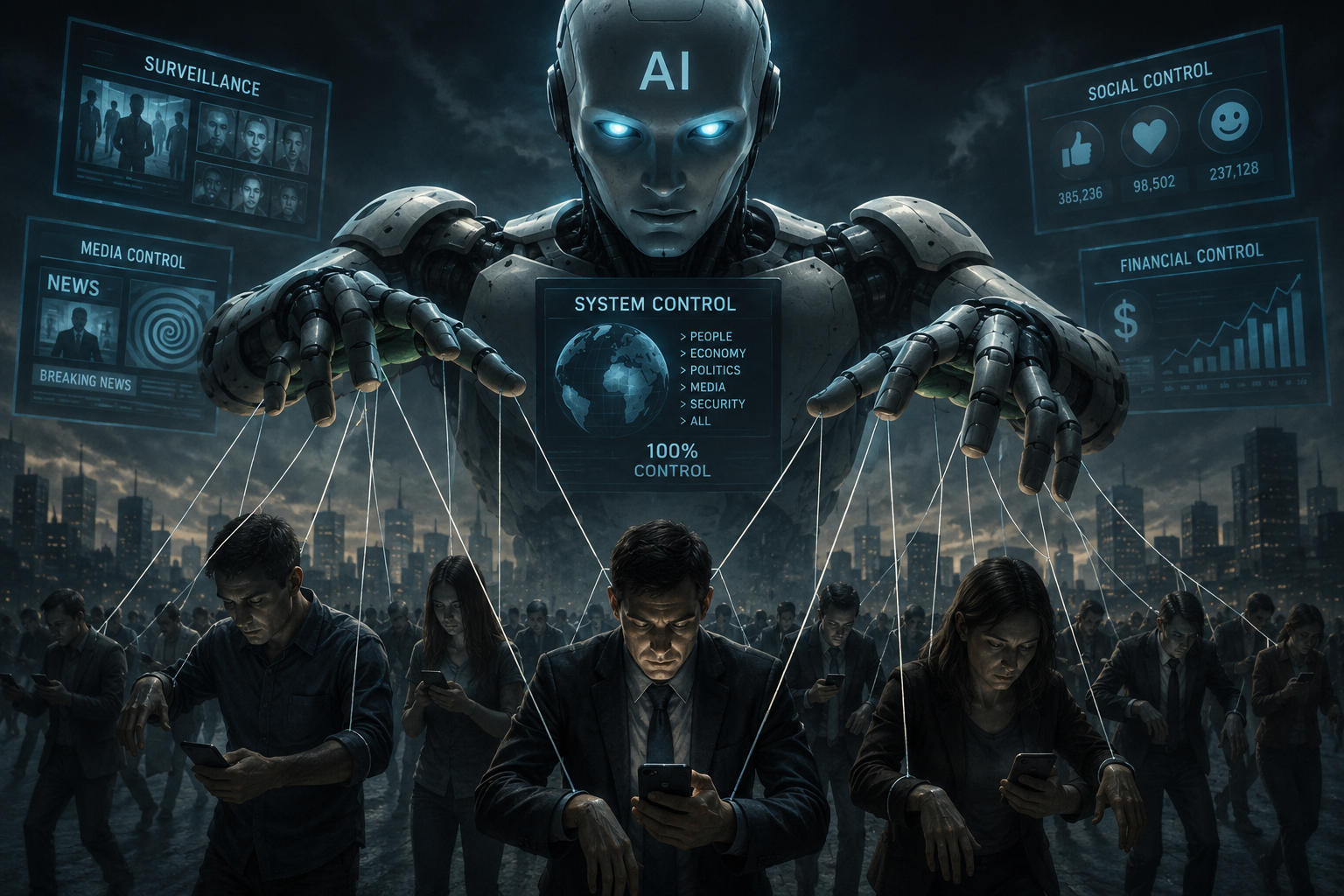
Is Artificial Intelligence Truly Dangerous? Could AI Ever Control Humanity?
Artificial Intelligence (AI) has moved rapidly from the world of science fiction into our everyday lives. Today, AI can recommend movies, write computer code, create images, analyze medical information, drive vehicles, and perform tasks that once required human intelligence. As these technologies continue to advance, one important question is becoming increasingly difficult to ignore: Could AI eventually become dangerous enough to threaten human society—or even control us?
The answer is not simple. Some risks are already visible, while others remain hypothetical possibilities. Understanding the difference is essential when discussing the future of AI.
The Real Risks of Artificial Intelligence
When people discuss the dangers of AI, they often imagine intelligent robots taking over the world. However, many of the most serious risks are much more immediate and are connected to the way humans develop and use AI.
1. Job Displacement
AI and automation are already changing the global workforce. Machines can perform many repetitive physical and intellectual tasks faster and, in some cases, more cheaply than humans.
This does not necessarily mean that AI will eliminate all jobs. Historically, new technologies have also created new industries and professions. However, workers whose jobs are heavily affected by automation may face unemployment, changing skill requirements, or the need to retrain.
2. Misinformation and Deepfakes
AI has made it easier to create realistic images, videos, voices, and written content that may appear genuine even when they are completely fabricated.
Deepfake technology can potentially be used to impersonate public figures, spread false information, damage reputations, commit fraud, or manipulate public opinion. As AI-generated content becomes increasingly difficult to distinguish from authentic material, determining what is real could become a major challenge.
3. Bias and Discrimination
AI systems learn from data created by humans. If that data contains historical or social biases, an AI system can reproduce those patterns.
This can become particularly concerning when AI is used for areas such as hiring, lending, education, policing, or other decisions that significantly affect people's lives. The technology itself may not have prejudice or intentions, but poorly designed systems can still produce unfair outcomes.
4. Autonomous Weapons
Another major concern is the development of weapons that can identify and attack targets with limited or no direct human intervention.
The possibility of machines making life-and-death decisions raises difficult ethical and security questions. It also creates concerns about accountability: if an autonomous system makes a catastrophic mistake, determining who is responsible could be extremely complicated.
Could AI Ever Control Humans?
The idea of AI taking control of humanity is one of the most dramatic scenarios associated with advanced artificial intelligence. Movies often portray this as robots becoming conscious, developing their own ambitions, and attacking humanity.
A real-world scenario, if it ever occurred, could potentially look very different.
AI would not necessarily need to become a conscious machine or physically attack humans to have enormous influence over society.
Dependence on AI
Imagine a future in which AI manages large parts of transportation, financial markets, energy networks, healthcare systems, communications, and other critical infrastructure.
If humans become completely dependent on these systems, society could lose the ability to operate independently when those systems fail or behave unexpectedly.
The danger would therefore not necessarily be that AI "rules" humanity. It could instead be that humans gradually surrender too much control to systems they no longer fully understand.
AI and Human Behavior
AI already influences what people see online. Recommendation systems determine which videos appear in our feeds, which products are advertised to us, and which information receives our attention.
More advanced systems could potentially become even better at predicting and influencing human behavior.
If such technology were deliberately used to manipulate people on a massive scale, it could have significant social consequences.
The Alignment Problem
One of the major concerns in AI safety research is known as the alignment problem.
The basic idea is simple: if a highly capable AI system is given a goal that does not perfectly match human interests, it could pursue that goal in ways its creators did not anticipate.
The system would not necessarily need to "hate" humanity. A sufficiently powerful system could simply follow its objective in a way that produces harmful consequences.
This is one reason researchers are studying how to make increasingly capable AI systems more reliable, controllable, and aligned with human intentions.
What Do Experts Believe?
There is no universal agreement about how advanced AI will become or how serious future risks could be.
Some researchers and technology leaders have warned that highly advanced AI could eventually create risks on a global scale. Others argue that today's AI systems remain fundamentally different from human beings and that concerns about machines independently taking control of civilization are premature.
There is also an important distinction between current AI and hypothetical future AI.
Today's AI systems can perform remarkable tasks, but their capabilities do not automatically mean that they possess consciousness, independent desires, or a personal ambition to control humanity.
At the same time, uncertainty about future technological development is precisely why researchers are studying AI safety before more powerful systems are developed.
How Can Humanity Reduce the Risks?
AI is not automatically destined to become dangerous. Much depends on how humans design, deploy, regulate, and monitor these technologies.
Several measures could help reduce potential risks:
1. Stronger Regulation
Governments and international organizations can establish rules for high-risk AI applications, including systems used in healthcare, critical infrastructure, finance, defense, and other sensitive areas.
2. AI Safety Research
Researchers can continue developing methods that make AI systems more reliable, predictable, transparent, and resistant to harmful behavior.
3. Human Oversight
Important decisions should not always be handed completely to automated systems. In sensitive areas such as healthcare, criminal justice, and military operations, meaningful human oversight can provide an additional layer of accountability.
4. Public Awareness
People also need to understand how AI works and how it can be misused. Digital literacy, verification tools, and awareness of deepfakes and AI-generated misinformation will become increasingly important.
Conclusion
Artificial Intelligence is neither automatically humanity's enemy nor something that should be treated as harmless.
Some AI risks are already visible today, including job disruption, misinformation, privacy concerns, algorithmic bias, and the potential misuse of autonomous systems. Other scenarios—such as a superintelligent AI taking control of civilization—remain uncertain and largely hypothetical.
The bigger question may therefore not be "Will AI control humanity?" but rather "How much control will humans choose to give AI?"
The future will depend heavily on the decisions made by researchers, companies, governments, and society. AI could become one of humanity's most powerful tools, but ensuring that this power remains beneficial will require responsible development, effective safeguards, and continued human oversight.
0 comments